Sources: This Old House, flat roof types (Homewyse estimates), updated March 6, 2026; slope from the 2021 International Residential Code, chapter 9; hail from the Insurance Information Institute.
The main commercial roofing types are single-ply membranes (TPO, PVC and EPDM), the asphalt-based systems (built-up roofing and modified bitumen), metal panels, and spray foam or liquid coatings. Almost every one of them sits on a low-slope roof, which is why people often call commercial roofing "flat roofing" or "low-slope roofing." Across the common types, This Old House puts a flat roof at about $7 to $13 per square foot installed, and each type trades cost against life, heat and how it handles foot traffic.
This guide walks through each commercial roof type in plain terms, compares them in one table, and covers what Texas heat, hail and sales tax change about the choice. If you own a small commercial building, a fourplex or a home with flat sections, our commercial roofing page explains how we inspect and quote low-slope roofs.
In this guide
- What commercial roofing means
- Commercial roofing types at a glance
- Single-ply membranes: TPO, PVC and EPDM
- Built-up roofing and modified bitumen
- Metal and the coating systems
- What Texas changes about the choice
- How to choose a type for your building
- Commercial roofing questions
What commercial roofing means
"Commercial roofing" describes the building more than the material. Offices, shops, warehouses, churches and apartment buildings tend to have wide roofs with little or no pitch, so the roofs are built differently from a shingle roof on a house. A shingle roof sheds water because each piece overlaps the one below and gravity pulls the water off. On a low-slope roof, water moves slowly, so the covering has to be one continuous waterproof layer.
"Flat" is a figure of speech. The 2021 International Residential Code (the edition up.codes lists for Texas) requires membrane, built-up and modified bitumen roofs to have a design slope of at least 1/4 inch per foot so they drain. Commercial buildings fall under the commercial code, but the idea is the same: a roof that holds water in the same low spot after every rain is a roof that wears out early in that spot.
Plenty of homes have the same roof types on a smaller scale: a flat section over a porch, a garage or an addition, tied into the shingle slopes. Those sections are built from the same materials covered below.
Commercial roofing types at a glance
Here is how the main types compare. Costs are installed prices per square foot from national guides, so treat them as a starting range rather than a quote for your building.
| Type | What it is | Cost per sq ft | Typical life |
|---|---|---|---|
| TPO | White single-ply sheet, heat-welded seams | $8–$11 | 15–30 years |
| PVC | Vinyl single-ply sheet, heat-welded seams | $5.50–$15 | Around 20 years |
| EPDM | Synthetic rubber sheet, taped or glued seams | $9–$13 | 20–30+ years |
| Built-up (BUR) | Layers of asphalt and felt, topped with gravel | $7–$9 | 20–30 years |
| Modified bitumen | Polymer-modified asphalt sheets in plies | $7–$9 | 20–30 years |
| Metal | Steel or aluminum panels, often standing seam | $15–$21 | 40–100 years |
Sources: TPO, EPDM, built-up, modified bitumen and metal costs from This Old House, flat roof replacement cost (Homewyse data, 2,000 sq ft roof), updated November 12, 2026; PVC cost and life from Fixr, rubber roof cost, updated January 31, 2025; other lifespans from This Old House's TPO and flat roof types guides.
Lifespan figures vary a lot by source, and they all assume a roof that was installed well and looked after. A flat roof that is never maintained can fail well before its range. This Old House gives about 10 years for one with no upkeep.
Single-ply membranes: TPO, PVC and EPDM
Single-ply roofs are wide sheets of membrane rolled across the roof and attached with fasteners, adhesive or ballast. They are the commercial roofing types you will see on most quotes for an office, shop or strip center.
TPO
TPO (thermoplastic polyolefin) is a white sheet made from a blend of synthetic rubber and polypropylene. Its seams are melted together with hot air, so the overlaps fuse into one piece. This Old House notes it repels dirt, reflects UV light and is common on strip malls and warehouses. Our guide to what a TPO roof is covers thickness, installation and where it tends to fail.
PVC
PVC is a vinyl membrane that is also heat-welded at the seams. This Old House notes it has been in use for decades, longer than TPO, while TPO is slightly stronger. The vinyl roofing industry group points to its fire resistance and to welded connections that are watertight. Fixr's installed range for PVC starts a little above TPO's.
EPDM
EPDM is a synthetic rubber sheet, usually black, with seams joined by tape or adhesive. The EPDM Roofing Association says it has been used on low-slope roofs for over 40 years. It stays flexible in heat and cold and resists scuffs and punctures well.
The trade-off in Texas is heat: a black surface absorbs the sun, and This Old House notes it can raise cooling costs in hot climates. White EPDM exists for that reason.
Built-up roofing and modified bitumen
Built-up roofing, the old "tar and gravel" roof, is made of alternating layers of asphalt and reinforcing felt with gravel on top. This Old House credits it with strong fire resistance and a long track record. Its drawbacks are weight, a messy and smelly installation, and leaks that are hard to trace through so many layers.
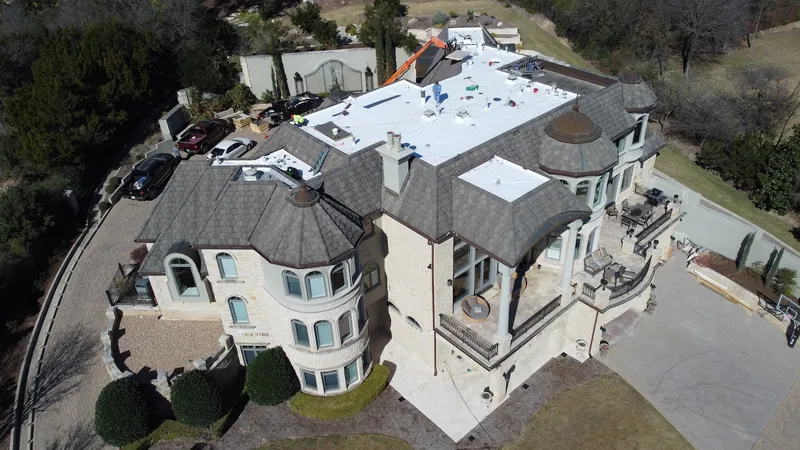
Modified bitumen is asphalt with rubber or plastic polymers added, laid as a base sheet, one or more plies and a cap sheet. It can be torched down, cold-applied or self-adhered. It handles moderate foot traffic, flexes with temperature swings, and is the lowest-cost option in This Old House's flat roof guide. It is also common on older flat sections of homes tied into a shingle roof.
Metal and the coating systems
Metal panels are the most expensive type in the table and the longest-lived. The residential code allows standing seam metal down to 1/4 inch per foot, but lapped panels need far more pitch, so metal suits buildings with some slope. This Old House notes metal resists high winds and large hail. Our standing seam metal roof cost guide explains why those panels cost what they do.
Spray polyurethane foam and liquid-applied coatings are sprayed or rolled over a roof to form a seamless surface. Acrylic and silicone coatings go over an existing roof that is still sound underneath, and This Old House suggests recoating a flat roof about every five years. They depend heavily on the condition of what they cover, so they are an inspection question, not a catalog pick.
What Texas changes about the choice
Sun and heat
A flat roof takes sun all day with no shade from its own slope. The EPA says a reflective "cool" roof can cut peak cooling demand in air-conditioned buildings by 11 to 27 percent, and lists light-colored single-ply membranes, reflective cap sheets and cool coatings among the low-slope options. That is a large part of why white membranes are so common on Texas commercial roofs.
Hail
Texas logged 902 major hail events (hail an inch or larger) in 2025, the most of any state by a wide margin, according to the Insurance Information Institute. Hail can bruise or puncture a membrane and dent rooftop equipment and metal edges. Membrane thickness, what sits under the membrane and a habit of checking the roof after storms all matter more here than in most states.
Sales tax
The Texas Comptroller treats the total charge for repairing or remodeling nonresidential real property as taxable, while labor on residential property is not. A roof over a shop or office carries sales tax that the same roof over a home's patio would not, so budget for it on any commercial bid.
Recover or tear off
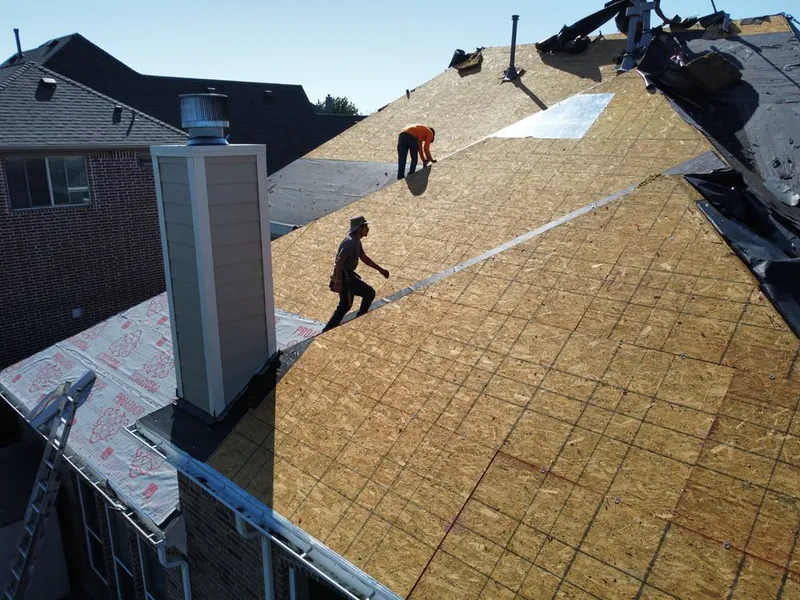
Laying a new roof over an old one saves tear-off cost but has limits. The residential code does not allow a recover where the existing roof is water soaked or already has two or more layers. Commercial buildings follow the commercial code, so confirm the rule for your building with the local permit office, but wet insulation under an old membrane is a reason to tear off on any building.
How to choose a type for your building
There is no single best commercial roofing type. The right one depends on a few questions:
- What is on the roof now, and in what condition? The existing roof, the number of layers and whether the insulation is wet decide whether a repair, a recover or a tear-off is even on the table.
- What happens on the roof? Kitchen exhaust and oily equipment favor a membrane that resists grease. This Old House notes TPO resists oil and grease while EPDM can degrade on contact with some chemicals. Frequent foot traffic favors tougher surfaces or walkway pads.
- How much heat reaches the space below? Over offices, shops and living space, a reflective surface earns its keep in a Texas summer.
- How long will you own the building? A shorter hold may favor a lower first cost; a longer one may justify a longer-lived system.
Two comparisons come up often enough to have their own guides: TPO roofing against the other membranes, and the cost side in our roof replacement cost guide.
How we approach a commercial roof
Most of what Viva Roofing does is residential, and we are open about that. On commercial and low-slope roofs, we take on flat sections, small commercial buildings and multi-family properties, and we start every one the same way:
- An inspection with photos. We walk the field of the roof, the seams, edges, flashing, drains and every penetration, with drone photos of the whole roof where the building allows. You get the photos whether or not you hire us.
- Repair first. A sound roof with a few failed seams or a leaking curb can often be repaired, and that is the first thing we look for.
- Options in writing. When replacement makes sense, we quote the low-slope options that fit your building and explain why.
- A straight answer on scope. If a building is outside what we can do well, we tell you at the inspection.
We are a family-owned company with an office in Frisco, working across Dallas-Fort Worth, San Antonio and Austin since 2021, from Plano, McKinney and Frisco to San Antonio and Austin. To find out which commercial roofing type fits your building, see our commercial roofing page or request a free inspection.
Commercial roofing questions
What is commercial roofing called?
It is usually called low-slope or flat roofing, because most commercial buildings have roofs with little or no pitch. The common systems are single-ply membranes (TPO, PVC, EPDM), built-up roofing, modified bitumen, metal and spray foam or coatings.
What are the main types of commercial roofing?
Single-ply membranes (TPO, PVC and EPDM), built-up roofing (tar and gravel), modified bitumen, metal panels, and spray polyurethane foam or liquid-applied coatings. Each trades cost against lifespan, heat reflection and how it handles foot traffic.
What is the cheapest commercial roofing type?
In This Old House's flat roof cost guide, modified bitumen and built-up roofing are the lowest-cost options at about $7 to $9 per square foot installed, with TPO at $8 to $11 and EPDM at $9 to $13. Tear-off, wet insulation and flashing details move any real quote.
How long does a commercial flat roof last?
Ranges run from about 15 to 30 years for most membranes and asphalt-based systems, and 40 years or more for metal. A flat roof with no maintenance can fail in about 10 years, according to This Old House.
Can a new commercial roof go over the old one?
Sometimes. A recover saves tear-off cost, but the residential code bars it where the old roof is water soaked or already has two or more layers, and commercial codes have their own limits. Wet insulation under the old roof is a reason to tear off on any building.
Is a commercial roof taxable in Texas?
Yes. The Texas Comptroller treats the total charge for repairing or remodeling nonresidential real property as taxable, while labor on residential property is not.