
Source: Texas Department of Insurance, home insurance guide. Deadlines can be extended after a weather catastrophe.
A roof insurance claim in Texas starts with you, not the roofer: you report the damage to your insurance company, an adjuster inspects the roof, and the insurer decides what your policy covers and pays. Texas law gives the insurer deadlines at each step. Most home policies cover sudden damage from wind and hail, while wear and tear and a slow, continuous leak are usually excluded, so the cause of the damage decides most claims.
This guide walks through what a typical Texas homeowners policy covers on a roof, how the claim moves from report to payment, the deadlines your insurer has to meet, and where a roofing contractor fits. For how an insurance roof job works with us, step by step, see our insurance claim roofing page.
In this guide
- What a home policy covers on a roof
- Will insurance pay for a leaking roof?
- Replacement cost vs. actual cash value
- The roof claim process, step by step
- How the money usually arrives
- Claims and your premium
- Where a roofer fits, and where Texas law draws the line
- After a storm: where to start
- Roof insurance claim questions
What a home policy covers on a roof
Coverage varies by company and policy, so your own policy is the final word. The Texas Department of Insurance (TDI) lists the risks most Texas home policies do and do not cover:
| Most policies cover | Most policies do not cover |
|---|---|
| Windstorm, hurricane and hail (not on the Gulf Coast) | Wear and tear |
| Sudden and accidental release of water | A continuous water leak |
| Fire and lightning | Flooding |
| Aircraft and vehicles | Mold removal, except to repair damage from a covered risk |
| Vandalism and theft | Termites, insects and rodents |
Source: TDI home insurance guide. Read your policy or ask your agent for your exact coverage.
For a roof, that usually means a hailstorm or a windstorm that tears off shingles is the kind of event a claim is for, and an old roof that has simply worn out is not. On the Texas coast and around Galveston Bay, TDI notes a home policy might not cover wind and hail, which coastal homeowners buy through the Texas Windstorm Insurance Association. That coastal split does not apply in Dallas-Fort Worth, San Antonio or Austin.
Will insurance pay for a leaking roof?
It depends on why the roof is leaking. If hail or wind damaged the roof and water came in as a result, the damage is usually tied to a covered event. If the roof leaked slowly for months because flashing wore out or a vent boot cracked with age, that is the continuous leak and wear and tear most policies exclude.
Either way, protect the house. TDI says to make temporary repairs only, like a tarp over a damaged roof, and not to make permanent repairs before the insurer sees the damage, because a company can deny a claim if the damage was repaired first. Keep receipts for anything you spend on temporary protection.
Replacement cost vs. actual cash value
Your policy pays one of two ways, and on a roof the difference can be large.
- Replacement cost coverage pays to repair or replace the roof at today's prices.
- Actual cash value coverage pays replacement cost minus depreciation, the loss in value from age and wear.
TDI's own example: if a new roof costs $10,000 today, a replacement cost policy works from that figure, while the actual cash value of a 10-year-old roof might be $7,000, and you pay the gap yourself. Check which kind of coverage your policy has for the roof before a storm, not after.
The roof claim process, step by step
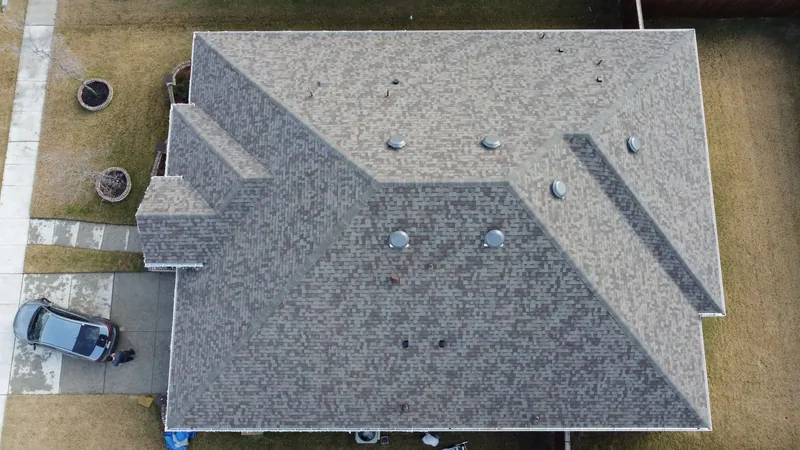
- Document the damage. Take photos and note the date of the storm. A roof inspection with close-up and drone photos gives you a clear record to share.
- Report the claim promptly. TDI says to tell your company as soon as possible: most companies have filing deadlines, and some policies set a one-year deadline unless you can show good cause for the delay. You can usually call, file online or use the company's app.
- The insurer acknowledges it. Under Texas law, the company has 15 days to tell you it got the claim, start its review and ask for any information it needs.
- The adjuster inspects. The adjuster may visit in person or review photos. TDI suggests being available so you can point out the damage, and taking notes on every call.
- The decision. The company has 15 business days after it gets everything it needs from you to accept or deny the claim, and a denial must say why in writing. It can take 45 more days if it tells you why, and TDI can extend deadlines after a weather catastrophe.
- Payment. Once the company agrees to pay all or part of the claim, it must pay within five business days.
Source: TDI, getting your insurance claim paid, and the TDI home insurance guide.
How the money usually arrives
With replacement cost coverage, TDI says most companies pay in two checks. The first comes after the adjuster has looked at the damage and is the estimated repair cost minus depreciation. The company holds back the depreciation and pays it after it gets the bill for the finished job, so the final invoice matters. You usually must finish repairs within a set time; ask your adjuster how long you have.
If you have a mortgage, the payment is often made out to your mortgage company too. TDI says the mortgage company must contact you within 10 days of getting the payment, and you then work with it to release the money for repairs. Your policy documents and your insurer are the right place for questions about what the policy covers, the claim timeline, and any amounts you are responsible for.
Claims and your premium
Many homeowners hold off on a roof claim because they worry about their rates. TDI's guidance on claims and premiums is more specific than most people expect. Home insurers can raise premiums for most types of claims, but they cannot charge you more for:
- claims for damage from natural causes, including weather;
- claims the company did not pay, including ones it denied because the policy does not cover the damage;
- calling your company or agent with questions about your policy or the claims process.
Claims still go on your record. TDI notes that most companies check a CLUE report, which shows home claims you have filed, even with other insurers, when deciding whether to sell you a policy and what to charge. And the nonrenewal rule TDI describes applies to three or more non-weather-related claims in three years. Starting with an inspection lets you see whether there is real storm damage before you decide to file.
Where a roofer fits, and where Texas law draws the line
Texas law separates a roofing contractor from a public adjuster, and a good roofer stays on the contractor side of it. Here is how that line falls on a job with us:
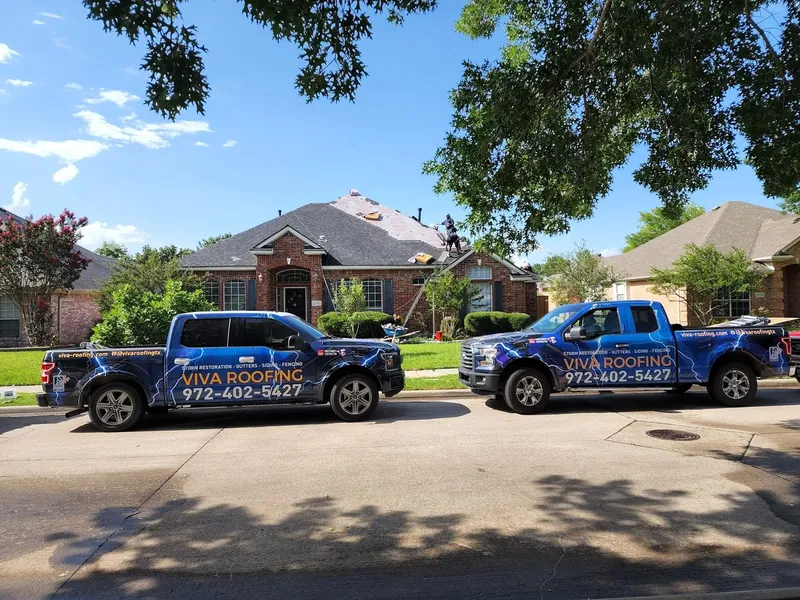
- We inspect and photograph the roof. It is free, and the photos are yours whether or not you hire us.
- We meet the adjuster on the roof, if you ask. We show the adjuster what we found and answer questions about the roof itself.
- We work from your adjuster's approved scope. We walk you through it line by line and write you an estimate before work starts. Upgrades are listed separately, and they are your call.
- We do not file or argue your claim. The claim stays between you and your insurer. Only you, or a public adjuster you hire, can negotiate it. Nobody but your insurer can promise what will be approved.
When the roof is done, you get our final invoice and before-and-after photos, the documents insurers typically ask for before releasing the rest of a payment.
After a storm: where to start
If a storm has come through, start with what is on the roof. Hail damage is easy to miss from the ground, and a leak can show up weeks later. A free inspection tells you whether there is storm damage at all, so you can decide whether a claim makes sense. If the storm that hit northeast San Antonio on September 11, 2026 is the reason you are reading this, our hail and storm damage page covers what we look for.
We are a family-owned roofing company with an office in Frisco, working across Dallas-Fort Worth, San Antonio and Austin since 2021, rated 5.0 on Google from 63 reviews. We inspect storm-hit roofs from McKinney, Allen, Prosper and Little Elm to Schertz, Cibolo and Converse. To see how an insurance roof job works with us, visit our insurance claim roofing page or request a free inspection.
Roof insurance claim questions
Will homeowners insurance pay for a leaky roof?
It depends on the cause. If wind or hail damaged the roof and water came in as a result, the damage is usually tied to a covered event. A slow, continuous leak from worn flashing or an aging roof falls under wear and tear and continuous leaks, which the Texas Department of Insurance says most policies do not cover.
Will homeowners insurance pay to replace a roof?
When a covered event such as hail or wind damaged it badly enough, a policy can pay for repair or replacement. With replacement cost coverage it pays at today's prices; with actual cash value coverage it subtracts depreciation for the roof's age and wear. An old roof that has simply worn out is not a covered loss.
Does homeowners insurance cover hail damage to a roof?
Most Texas home policies cover windstorm and hail damage, according to TDI. On the Gulf Coast a home policy might not, and coastal homeowners buy wind and hail coverage through the Texas Windstorm Insurance Association.
How long does an insurance company have to pay a roof claim in Texas?
TDI says the company has 15 days to acknowledge the claim, 15 business days after it has everything it needs to accept or deny it, and five business days to pay once it agrees. It can take 45 more days to decide if it tells you why, and deadlines can be extended after a weather catastrophe.
Will my premium go up if I file a roof claim?
TDI says home insurers cannot charge you more for claims for damage from natural causes, including weather, or for claims they did not pay. Claims still show on your CLUE report, which insurers use when deciding whether to sell you a policy.
Should I fix my roof before the adjuster comes?
Only temporarily. TDI says to make temporary repairs, such as a tarp, to stop more damage, but not permanent repairs before the insurer sees the damage, because the company might deny the claim.
Can my roofer handle the insurance claim for me?
No. In Texas, a roofing contractor cannot act as your public adjuster. The claim stays between you and your insurer. A roofer can inspect and photograph the roof, meet the adjuster on the roof if you ask, and work from the scope your insurer approves.