
Sources: cost from This Old House, roof repair cost (Homewyse and Angi data), updated March 5, 2026; hail size and count from the Insurance Information Institute.
How to repair hail damage on a roof depends on how far the damage spreads. A few cracked or bruised shingles are cut out and replaced with matching ones, dented vents and flashing are swapped out, and a punctured flat roof gets a welded patch. When the hits are spread across every slope, the honest repair is a new roof. What a homeowner can safely do is the part before the repair: spot the signs from the ground, photograph them, keep water out, and get the roof inspected.
This guide walks through those steps in order, what the repair itself involves on shingle, metal and flat roofs, when a repair is worth it and what it costs. For how we inspect a roof after a storm, see our hail and storm damage repair page.
In this guide
- Step 1: Check for hail damage from the ground
- Step 2: Photograph everything
- Step 3: Keep water out
- Step 4: Get the roof inspected
- Step 5: The repair itself, by roof type
- Can you repair hail damage yourself?
- What hail damage repair costs
- Is repairing hail damage worth it?
- Hail damage repair questions
Step 1: Check for hail damage from the ground
Hail damage on a shingle roof is small, scattered and up high, so most homes look the same from the driveway the morning after a storm. You can still learn a lot without a ladder:
- Dented metal. New dings in gutters, downspouts, roof vents or the fins of the outdoor air conditioning unit.
- Granules where they shouldn't be. Dark, sand-like grit in the gutters or washing out of the downspouts.
- Shingle pieces in the yard, or a patch of roof that looks a different color.
- Water inside. A new ceiling stain or damp insulation in the attic after rain.
- The neighbors. Hail tends to hit a whole street at once. If houses around you are getting inspected, yours took the same storm.
Size matters too. The Insurance Information Institute counts hail an inch or larger as "major," and Texas had 902 of those events in 2025, more than twice any other state. Bob Vila's hail guide (updated 2022) notes that even smaller hail can damage a roof when the wind behind it is strong.
Step 2: Photograph everything
Before anything gets cleaned up or fixed, take photos and video: the dented metal, the granules, any shingle pieces, the ceiling stain, and the hailstones themselves next to a coin or ruler if you can do it right after the storm. The Texas Department of Insurance advises taking photos and video of the damage and not throwing anything away until your adjuster says it is fine.
Write down the date and time of the storm too. If you decide to file a claim, a dated record made the same week is worth far more than one pieced together later.
Step 3: Keep water out
If water is getting in, stop the damage from spreading. TDI's recovery tips say to make temporary repairs to prevent more damage, keep a list of the repairs and save the receipts, and not to make permanent repairs before the insurance adjuster has seen the damage.
Inside, that means moving belongings, catching drips and drying wet areas. Outside, it usually means a tarp over the damaged area until the roof can be repaired properly. A tarp on a roof is a job at height, on a surface that may be wet and damaged, and the U.S. Occupational Safety and Health Administration notes that falls are among the most common causes of serious work-related injuries and deaths. If you aren't comfortable on a roof, this is the step to hand off.
Step 4: Get the roof inspected
Hail bruises are hard to see even standing on the roof. A hit knocks granules loose in a round patch, and a harder one leaves a soft dent where the mat underneath has fractured. A bruise doesn't leak the next day. It leaves a weak spot that the sun and rain work on until it does, which is why damage gets missed and turns up as a leak a year later.
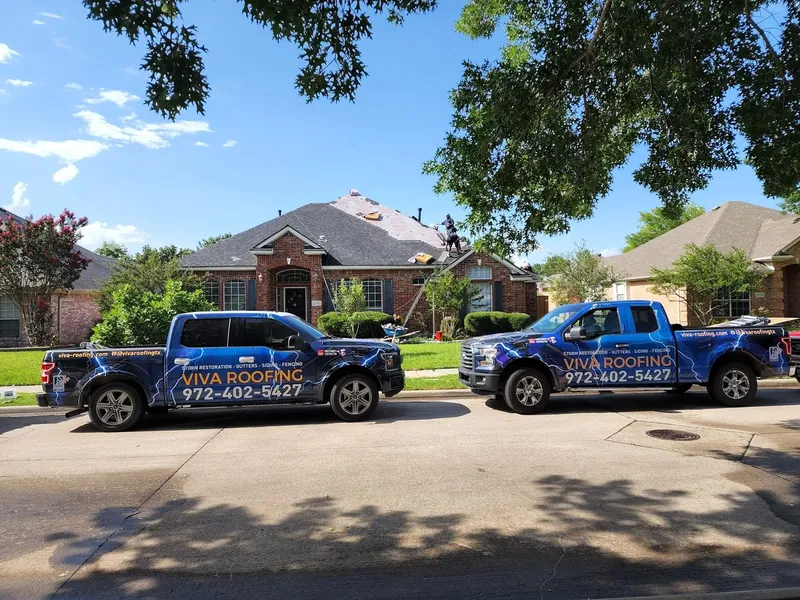
On a Viva Roofing storm inspection, we go up, mark and photograph each hit, check every slope, the ridge, the flashing, vents, pipe boots and gutters, and add drone photos of the whole roof where it allows. The inspection is free, and you get the photos whether or not you hire us. If the roof came through fine, we tell you that.
Step 5: The repair itself, by roof type
Asphalt shingles: a few damaged shingles
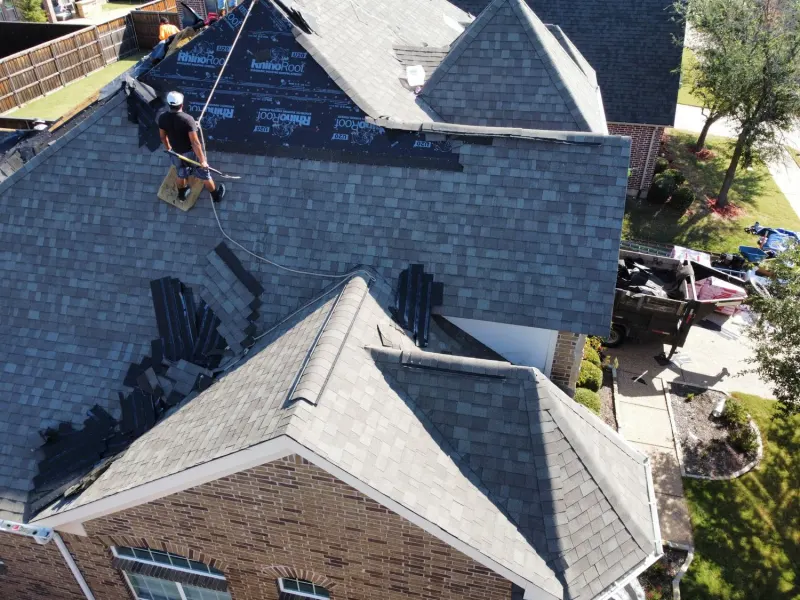
When the damage is limited to a handful of shingles, the broken ones are removed, new shingles are slid into place, nailed correctly and sealed so they lie flat. The new ones are matched in color and style as closely as possible, though shingles that have been in the sun for years will look a little different until the new ones weather. Any dented vents, pipe boots or flashing that took hits are replaced at the same time. Our roof flashing installation guide shows how that metal should be lapped when it goes back on.
Asphalt shingles: damage across the roof
When hail has bruised shingles across most of the roof, patching individual shingles doesn't fix the problem, because every slope is carrying the same hidden damage. The same goes for an older roof whose shingles are brittle enough that walking on them breaks more than it fixes. Then the repair that lasts is a replacement: tear-off to the decking, any soft decking replaced, new underlayment and new shingles. Our roof replacement cost guide explains what moves that price.
Metal roofs
This Old House notes metal resists large hail, and Bob Vila's guide says normal-size hail won't dent a metal roof. What matters after a big storm is whether a hit opened a seam, cracked a coating or damaged a fastener or trim piece, since that is where water gets in. Damaged panels or trim are replaced. Our putting on metal roofing guide shows how those pieces fit together.
Flat and low-slope sections
Hail can puncture a single-ply membrane. On TPO and PVC, many punctures are repaired by cleaning the membrane and welding a patch of matching material over the spot. Rooftop equipment and metal edges often show dents first. Our guide to commercial roofing types covers how each flat roof system holds up.
Can you repair hail damage yourself?
Steps 1 to 3 are yours to do. The repair itself usually isn't a good DIY job, for three reasons.
Finding every bruise takes a trained eye, so a homeowner patching what they can see often misses the rest. Sealed shingles have to be lifted and re-nailed without breaking the ones around them, which is hard on an older roof in Texas heat. And if you plan to file a claim, the adjuster needs to see the damage before anything permanent is done. Bob Vila's hail guide puts it plainly: if you don't have experience repairing roofs, call a professional.
What hail damage repair costs
This Old House's 2026 roof repair guide gives these national ranges:
| Repair | Typical cost |
|---|---|
| Hail damage repair | $700–$4,000 |
| Shingle damage | $50–$800 |
| Roof vents | $75–$250 |
| Chimney or roof flashing | $200–$500 |
| Roof inspection | $100–$600 |
| Full roof replacement (average) | $15,439 |
Source: This Old House, cost of roof repair, updated March 5, 2026 (Homewyse and Angi data).
The spread is wide because "hail damage" can mean three shingles and a vent or most of a roof. If you file a claim, what the insurer pays depends on your policy, your deductible and whether it pays replacement cost or actual cash value. Our roof insurance claim guide walks through that process in Texas. One rule to know: TDI notes that state law makes it illegal for a contractor or roofer to offer to waive your deductible or promise a rebate for it.
Is repairing hail damage worth it?
Usually, yes. A bruised shingle doesn't leak right away, but it wears faster than the shingles around it, and a leak that runs for months can soften the decking and soak the insulation and drywall under it. Fixing a few shingles now is cheaper than replacing the wood underneath later.
When a replacement is the answer, it is a chance to choose a tougher roof. Class 4 is the highest rating under the UL 2218 impact test, and TDI notes that insurers set their own premium credits for impact-resistant roofing, with Class 4 earning the highest credit under the state's windstorm pool. Our customers have chosen Class 4 shingles with us, and we can quote them next to a standard architectural shingle so you can compare.
After a storm, start with the photos
Viva Roofing is a family-owned roofing company with an office in Frisco, working across Dallas-Fort Worth, San Antonio and Austin since 2021. A lot of our work is restoring roofs after hail. After the September 11, 2026 hail in northeast San Antonio, we have been inspecting roofs in San Antonio, Schertz, Cibolo and Converse. We inspect for hail across Dallas-Fort Worth too, from McKinney and Prosper to Rowlett.
If you make a claim, it is between you and your insurer: you file it, their adjuster inspects, our photos are yours to send, and if the work goes ahead we work from your adjuster's approved scope. To find out what the last storm did to your roof, see our hail and storm damage repair page or request a free inspection.
Hail damage repair questions
How do you repair hail damage on a roof?
Limited damage is repaired by removing the cracked or bruised shingles, sliding in matching new ones, nailing and sealing them, and replacing any dented vents, pipe boots or flashing. When the hits are spread across most of the roof, a replacement is the repair that lasts. Flat membranes are usually patched by welding matching material over the puncture.
Can I fix hail damage on my roof myself?
You can check for damage from the ground, photograph it and keep water out with temporary measures. The repair itself is work at height, bruises are easy to miss, and if you plan to file a claim the adjuster should see the damage before permanent repairs, so most homeowners leave it to a roofer.
How much does it cost to repair hail damage on a roof?
This Old House gives a national range of $700 to $4,000 for hail damage repair, with individual shingle repairs from $50 to $800 and a full replacement averaging $15,439. The spread depends on how much of the roof was hit.
Is it worth repairing hail damage?
Usually. A bruised shingle doesn't leak right away, but it wears faster than the shingles around it, and a slow leak can ruin decking, insulation and drywall. Fixing a few shingles now costs less than replacing wood later.
What should I do right after a hail storm?
Check for dented gutters, vents and AC fins and for granules in the downspouts, photograph everything with the date, make temporary repairs to stop water and keep the receipts, and avoid permanent repairs until your adjuster has seen the damage if you plan to claim.
Will a roofer waive my deductible in Texas?
No. The Texas Department of Insurance notes that state law makes it illegal for a contractor or roofer to offer to waive your deductible or promise a rebate for it.