
Source: This Old House, flat roof replacement cost (Homewyse data), updated November 12, 2026.
TPO vs. EPDM roof comes down to plastic against rubber. TPO is a white thermoplastic sheet whose seams are welded with hot air. EPDM is a synthetic rubber sheet, usually black, whose seams are joined with tape or adhesive.
EPDM has the longer track record and This Old House calls it slightly more weather-resistant; TPO reflects the sun and resists oil and grease. On a Texas flat roof, that white surface is often the deciding point.
This guide compares the two on materials, seams, cost, lifespan, heat, hail and repairs, then sets out which fits which building. For how we inspect and quote low-slope roofs, see our commercial roofing page.
In this guide
- TPO vs. EPDM at a glance
- Welded seams vs. taped seams
- Cost and lifespan
- Heat: the Texas question
- Hail, foot traffic and grease
- How each is installed and repaired
- Which one fits your roof
- TPO vs. EPDM questions
TPO vs. EPDM at a glance
| Feature | TPO | EPDM |
|---|---|---|
| Material | Thermoplastic polyolefin: synthetic rubber and polypropylene | Ethylene propylene diene monomer: synthetic rubber |
| Standard to ask for | ASTM D6878 | ASTM D4637 |
| Usual color | White | Black (white available) |
| Seams | Heat-welded | Tape or adhesive |
| Installed cost | $8–$11 per sq ft | $9–$13 per sq ft |
| Typical life | 15–30 years | Around 30 years |
| Oil and grease | Resists them | Can degrade with some chemicals |
Sources: This Old House, TPO roofing guide and flat roof replacement cost, both updated November 12, 2026; ASTM standards from the 2021 International Residential Code, sections R905.12 and R905.13.
Lifespan figures for EPDM run all over the place. This Old House gives about 30 years in its TPO guide and up to 50 in its flat roof types guide, and the EPDM Roofing Association, the manufacturers' group, says its membrane can last 38 years or more. Take any single number loosely. Installation and upkeep decide more than the material.
Welded seams vs. taped seams
The biggest practical difference is how the sheets are joined.
TPO is thermoplastic: it softens when heated and hardens as it cools. A hot-air welder melts the overlap between two sheets so they fuse into one. A weld that was rushed or run too cool is where a TPO roof starts leaking. Our guide to what a TPO roof is goes through the install in more detail.
EPDM is a thermoset rubber (the building code lists it under thermoset single-ply roofs), so it can't be heat-welded. Its seams are joined with seam tape or adhesive. The EPDM Roofing Association notes that seam tapes replaced liquid adhesives in the 1980s.
EPDM comes in large sheets, which means fewer seams, but This Old House notes the adhesive can degrade over time without maintenance. On an older EPDM roof, the seams are the first place to look.
Cost and lifespan
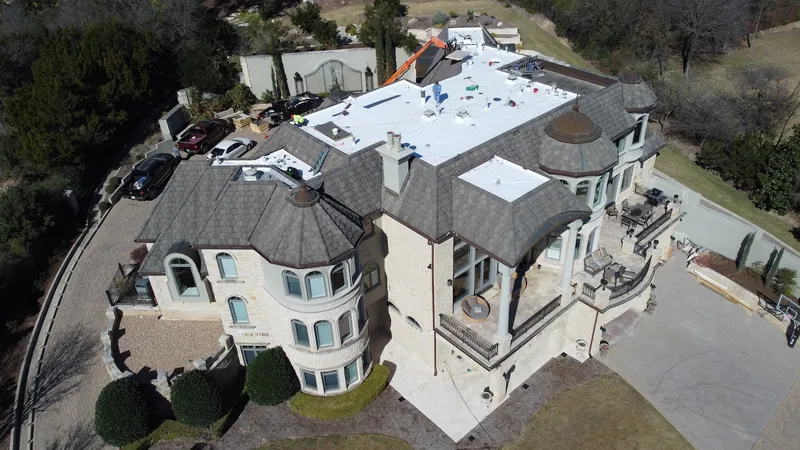
This Old House's November 2026 flat roof guide puts TPO at $8 to $11 per square foot and EPDM at $9 to $13 on a 2,000-square-foot roof. Fixr's older guide (January 2025) has wider, overlapping ranges: TPO at $4.50 to $14 and EPDM at $4.25 to $13. Read together, the two membranes cost about the same, and the scope of the job moves a bid more than the choice between them: tear-off, wet insulation, cover board and every curb, drain and wall that needs flashing.
On lifespan, EPDM has the longer history. The EPDM Roofing Association says the membrane has been used on low-slope roofs for over 40 years and points to roofs from the 1970s still in service. This Old House describes TPO as relatively new by comparison and gives it 15 to 30 years with regular maintenance. Our commercial roofing types guide shows how both compare with PVC, built-up and metal.
Heat: the Texas question
A flat roof takes the full sun all day. A black EPDM roof absorbs much of it, and This Old House notes black membranes may raise cooling costs in hot climates. White TPO sends much of that sunlight back: Elevate's UltraPly white TPO technical sheet lists 79% solar reflectance when new and 69% after three years of weathering, under Cool Roof Rating Council testing. The EPA says a cool roof can cut peak cooling demand in air-conditioned buildings by 11 to 27 percent.
White EPDM exists for exactly this reason, so the color question isn't strictly TPO against EPDM. But if you are comparing a standard black EPDM bid with a standard white TPO bid for a roof over offices, a shop or living space in Dallas, San Antonio or Austin, the heat difference belongs in the comparison.
Hail, foot traffic and grease
Texas logged 902 major hail events in 2025, more than any other state, according to the Insurance Information Institute. This Old House rates EPDM as highly resistant to scuffs, tears and punctures and flexible in heat and cold. Either single ply can still be punctured by large hail, dropped tools or boots carrying grit, so walkway pads on service paths and a look at the roof after big storms help on both.
Grease is where TPO pulls ahead. This Old House notes TPO resists oil and grease, while EPDM can degrade on contact with a corrosive chemical. That matters near kitchen exhaust, oily equipment and some vents. The EPDM Roofing Association notes that petroleum harms EPDM mainly through prolonged contact with liquid, so ask for the manufacturer's chemical-resistance data if your roof carries a restaurant hood.
How each is installed and repaired
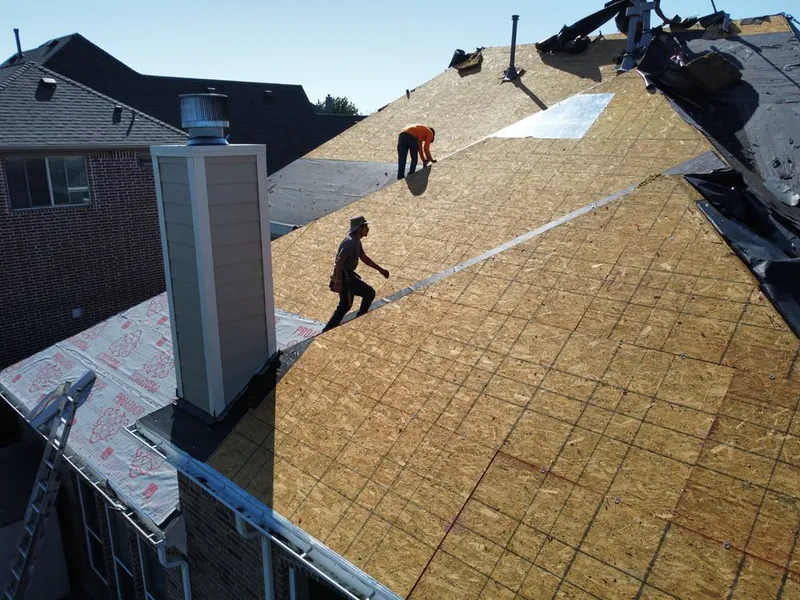
Both go on over a cleaned or new deck and rigid insulation or cover board. The EPDM Roofing Association lists three ways to attach EPDM: ballasted, fully adhered and mechanically fastened. TPO is usually mechanically fastened or adhered, and its seams are welded on site.
Repairs follow the same split. A TPO puncture is often fixed by cleaning the membrane and welding a patch of TPO over the spot. An EPDM tear is cleaned, primed and covered with a patch that bonds to the rubber, which the EPDM Roofing Association says can be done with simple tools.
Either way, the patch has to match the membrane: you can't weld TPO onto EPDM. Like any flat roof, both depend on their edges and flashing, which our roof flashing installation guide covers.
Which one fits your roof
- Roof over conditioned space in full Texas sun: white TPO, or white EPDM if you prefer rubber.
- Kitchen exhaust or oily equipment: TPO's grease resistance counts, but check the specific product's chemical data.
- The longest track record: EPDM, with decades of roofs in service.
- A roof you are repairing, not replacing: stick with what is there. The patch has to match the membrane.
- A tight budget: compare full scopes, not membranes. The two cost about the same per square foot.
How we look at a flat roof
Viva Roofing is a family-owned roofing company with an office in Frisco, working across Dallas-Fort Worth, San Antonio and Austin since 2021. Most of our work is residential, and we also take on flat sections, small commercial buildings and multi-family properties. On every low-slope roof we inspect and photograph the field, seams, edges, flashing, drains and penetrations, with drone photos where the building allows, and you keep the photos whether or not you hire us. We look for a repair first, and when a replacement makes sense we quote the low-slope options that fit the building in writing and explain why.
We inspect flat and mixed roofs from Dallas, Garland and Denton to Boerne, Georgetown and Cedar Park. To settle TPO vs. EPDM for your own roof, see our commercial roofing page or request a free inspection.
TPO vs. EPDM questions
What is the difference between TPO and EPDM?
TPO is a thermoplastic sheet, usually white, with seams welded by hot air. EPDM is a synthetic rubber sheet, usually black, with seams joined by tape or adhesive. EPDM has the longer track record; TPO reflects more sun and resists oil and grease.
What's better, TPO or EPDM?
Neither in every case. White TPO usually suits a roof over conditioned space in full Texas sun or near kitchen exhaust, while EPDM has decades of roofs in service and This Old House calls it slightly more weather-resistant. The building and the installation matter more than the label.
Is TPO or EPDM cheaper?
They cost about the same. This Old House puts TPO at $8 to $11 and EPDM at $9 to $13 per square foot on a 2,000-square-foot roof, while Fixr's older ranges overlap almost completely. Tear-off, insulation and flashing scope move a bid more than the membrane.
How long does an EPDM roof last compared with TPO?
This Old House gives EPDM about 30 years and TPO 15 to 30 years with maintenance, and the EPDM Roofing Association says EPDM can last 38 years or more. Seams, flashing and upkeep decide where a real roof lands.
Can EPDM be white?
Yes. EPDM is usually black, but white EPDM is made to reflect more sun, which This Old House suggests for hot climates.
Can you put TPO over EPDM or patch one with the other?
A patch has to match the membrane: TPO is heat-welded and EPDM is taped or glued, so they don't bond to each other the same way. Whether a new roof can go over an old one is a recover question that depends on the condition of the old roof and the code, so it is answered at the inspection.